Why Sheetz is raising Hershey candy prices in 2025
Effective September 17, 2025, Sheetz will increase prices on select regular and king-size Hershey candy bars to offset a 26% wholesale cost increase from the manufacturer. This price hike directly responds to Hershey’s rising production costs, which are driven by a global cocoa shortage, poor weather in West Africa, and increased tariff expenses.
Why is Hershey raising its wholesale costs by 26%?
To understand the sudden jump at the register, we have to look at the global supply chain. The Hershey Company implemented a 26% cost increase on several of its core products, leaving retailers like Sheetz with little choice but to pass those expenses on to the consumer.
Several intersecting factors are driving this massive wholesale surge.
- West African Weather Conditions: West Africa produces more than 70% of the world’s global cocoa supply. Recently, the region has suffered from extreme heat and poor weather conditions, severely damaging crop yields.
- Global Cocoa Shortages: With fewer viable crops, the basic law of supply and demand has driven the raw price of cocoa to historic highs.
- Tariff Expenses: In July 2025, former Hershey CEO Michele Buck noted that cocoa prices and new tariff expenses could cost the company an additional $15 million to $20 million.
Here is a quick breakdown of the primary factors impacting your chocolate costs:
| Economic Factor | Impact on Hershey | Result for Consumers |
| Extreme Heat in West Africa | Reduced cocoa crop yields | Less available chocolate |
| Global Cocoa Shortages | Highest raw material costs in years | Double-digit retail price hikes |
| New Tariff Expenses | $15M–$20M in added quarterly costs | Passed down to wholesale pricing |
Which candy bars cost more at Sheetz?
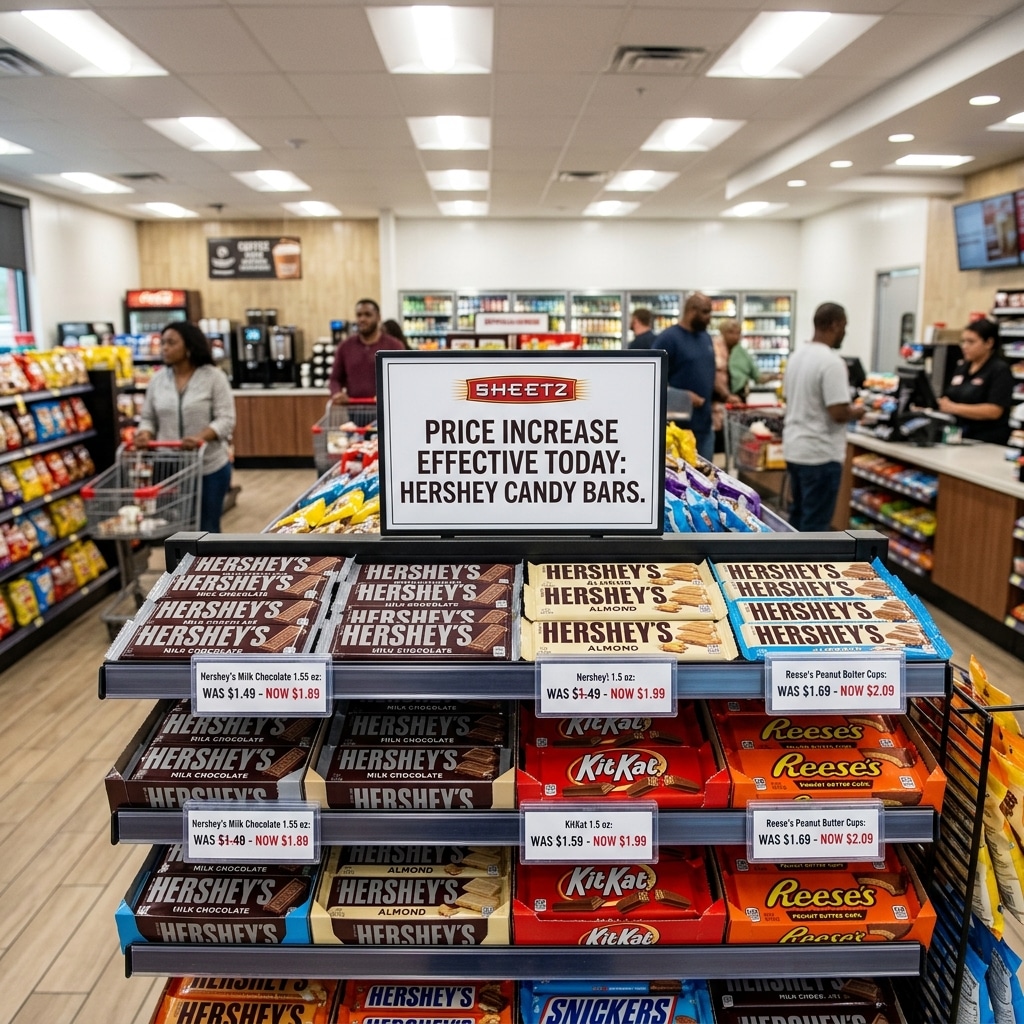
Nick Ruffner, the Public Affairs Manager for Sheetz, confirmed that the price adjustment takes effect on September 17, 2025. Sheetz remains committed to transparency, posting notices in stores to alert customers before they reach the checkout counter.
This change exclusively affects Hershey-branded items. All other non-Hershey products inside Sheetz remain unaffected by this specific 26% hike.
The price increase applies to both regular-size and king-size variations of the following popular items:
- Reese’s Peanut Butter Cups
- Hershey’s Milk Chocolate Bars
- Kit-Kat Wafer Bars
- PayDay Peanut Caramel Bars
If you prefer non-chocolate snacks, gummies, or candies manufactured by competing brands (like Mars), you will not see this immediate 26% jump on your receipt at Sheetz—though broader market trends suggest those prices may eventually rise as well.
Are other convenience stores raising chocolate prices?
Sheetz is not operating in a vacuum. The entire convenience store and confectionery industry is grappling with the same raw material shortages. Candy was the sixth-largest sales category for convenience stores in 2024, with chocolate making up more than half of those sales.
Casey’s General Stores recently noted in an earnings call that it has also passed some candy cost increases onto the consumer. Beyond convenience stores, independent retailers are feeling the squeeze.
Major chocolate manufacturers globally are taking similar steps to protect their profit margins:
- Lindt & Sprungli: The Swiss chocolate giant passed along a 15.8% price increase earlier this year.
- Mondelēz International: The manufacturer behind Toblerone, Milka, and Cadbury announced it may also need to raise prices to combat cocoa inflation.
What does the future hold for your sweet tooth?
The era of the cheap checkout-aisle candy bar appears to be on pause. As long as environmental challenges persist in West Africa and global supply chains remain strained by tariffs, cocoa will remain an expensive commodity. Retailers like Sheetz are simply the final link in a complex chain of agricultural and economic events.
Consumers who want to satisfy their chocolate cravings without breaking the bank might need to look for bulk purchasing options, seek out sales, or temporarily pivot to non-chocolate alternatives.
Frequently Asked Questions
When does the Sheetz Hershey candy price increase take effect?
The price increase for select Hershey products at Sheetz takes effect on September 17, 2025.
What is the exact percentage of the Hershey price increase?
The Hershey Company implemented a 26% wholesale cost increase on select regular and king-size candy bars.
Which specific candy bars are affected by the Sheetz price hike?
The price increase applies to Hershey-branded regular and king-size bars, specifically including Reese’s, Hershey’s, Kit-Kat, and PayDay.
Are non-Hershey candies at Sheetz also increasing in price?
No. Sheetz confirmed that this specific 26% price adjustment only applies to Hershey-branded items. All other products remain unaffected.
Why is Hershey raising its candy prices in 2025?
Hershey is raising prices due to a historic surge in raw cocoa costs caused by severe heat and poor weather in West Africa, alongside an estimated $15 million to $20 million in additional tariff expenses.
How much of the world’s cocoa comes from West Africa?
West Africa produces more than 70% of the global cocoa supply, making it highly vulnerable to regional weather disruptions.
Are other convenience stores besides Sheetz raising candy prices?
Yes. Casey’s General Stores recently confirmed in an earnings call that they have also passed candy cost increases along to consumers due to the same supply chain pressures.
Have other global chocolate manufacturers raised their prices?
Yes. Lindt & Sprungli passed along a 15.8% price increase recently, and Mondelēz International (maker of Toblerone and Cadbury) stated they are considering similar hikes.
How important is candy to convenience store sales?
Candy was the sixth-largest overall sales category for US convenience stores in 2024, with chocolate accounting for over half of those total candy sales.
How is Sheetz notifying customers about the price jump?
Sheetz is maintaining transparency by posting physical notices regarding the Hershey price adjustments in all of its store locations prior to the September 17 effective date.